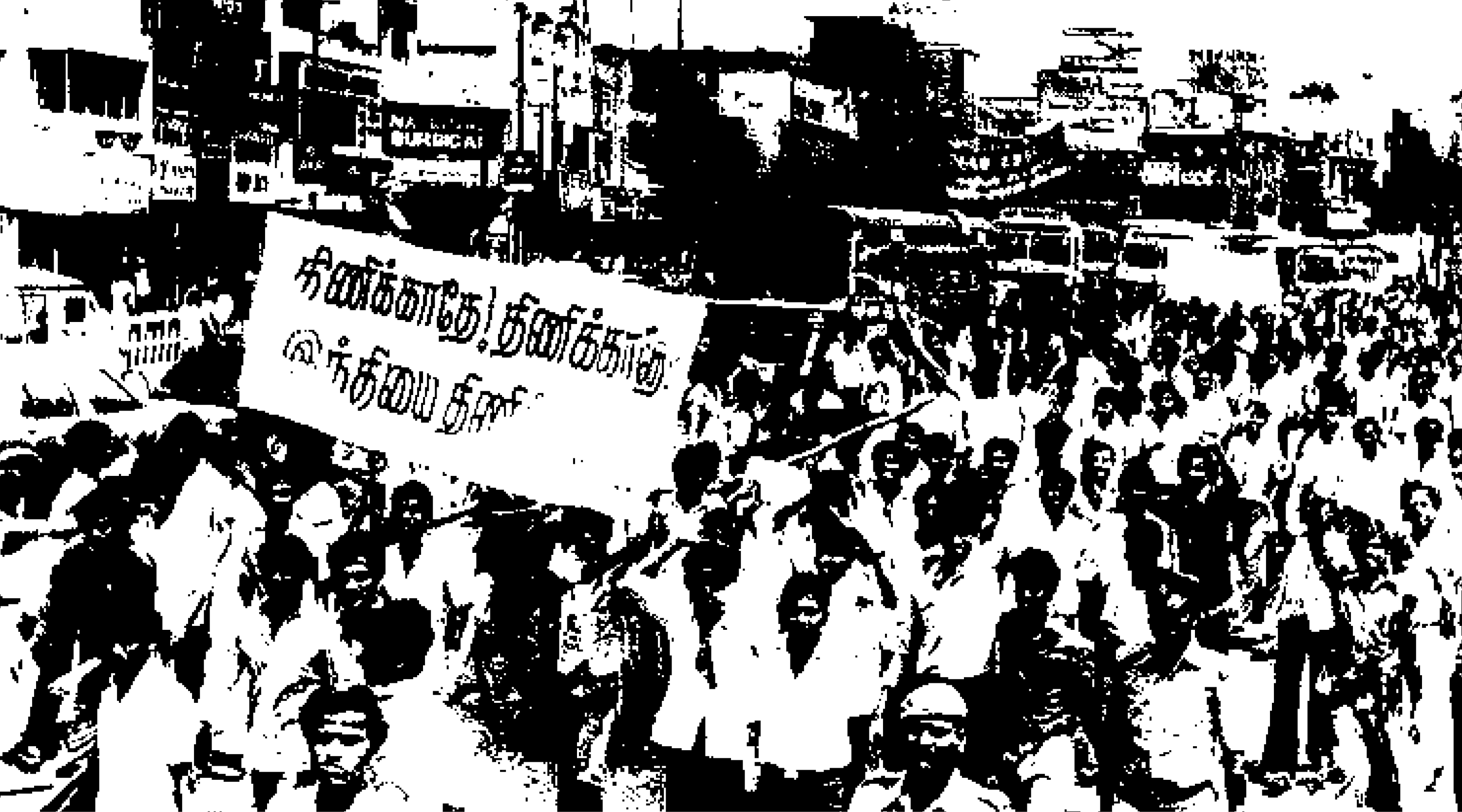
Discussing my initial inspiration of my thesis topic and the current political and social relevance of the language debate in India.
Language is one of the most important things we have - it’s how we communicate and make sense of the world.
The history of linguistic imperialism in South Asia is a long and complex one. However, in the current state of the country, it is important to look back at how people resisted linguistic imperialism of dominant language on other linguistic communities - especially the resistance of the Tamil community against Hindi imposition.
In the current political context of India, I think it’s vital to talk about this issue as it’s integral to preserving one’s identity and resisting cultural homogenization. By talking about this, we also uncover structural inequalities that are deeply embedded within Indian society.
